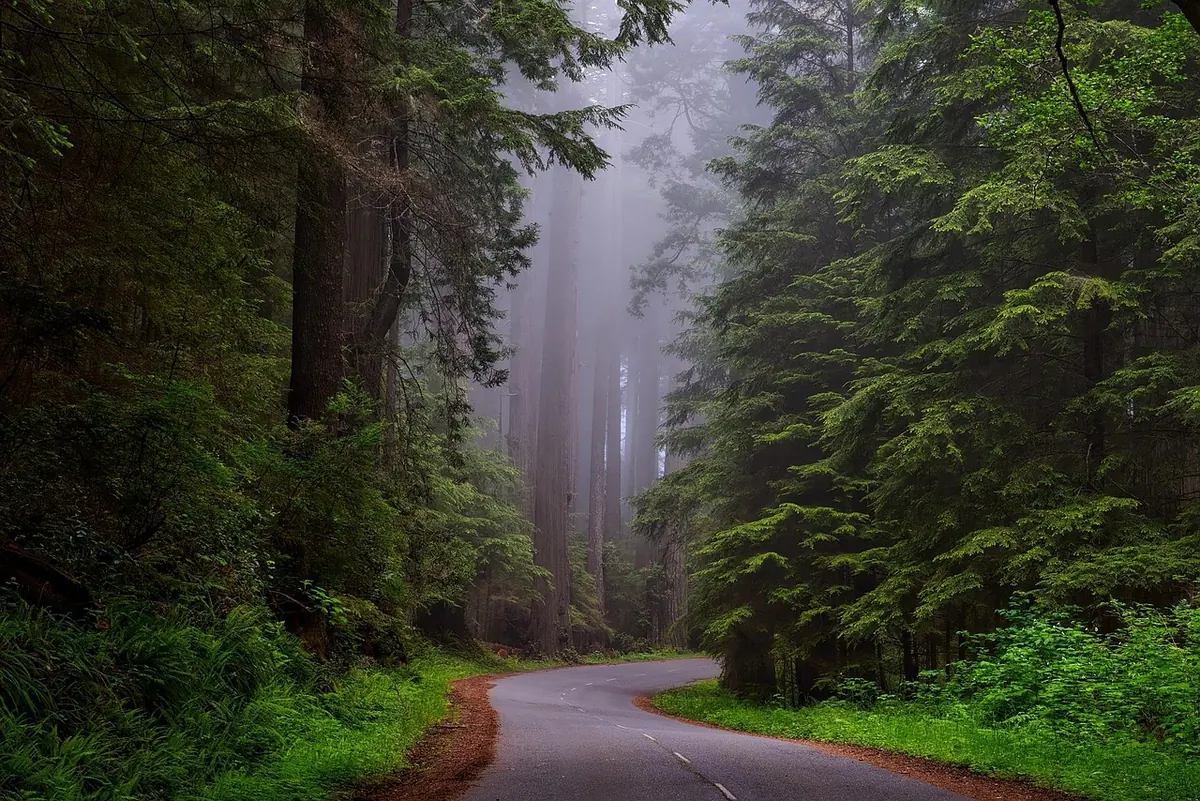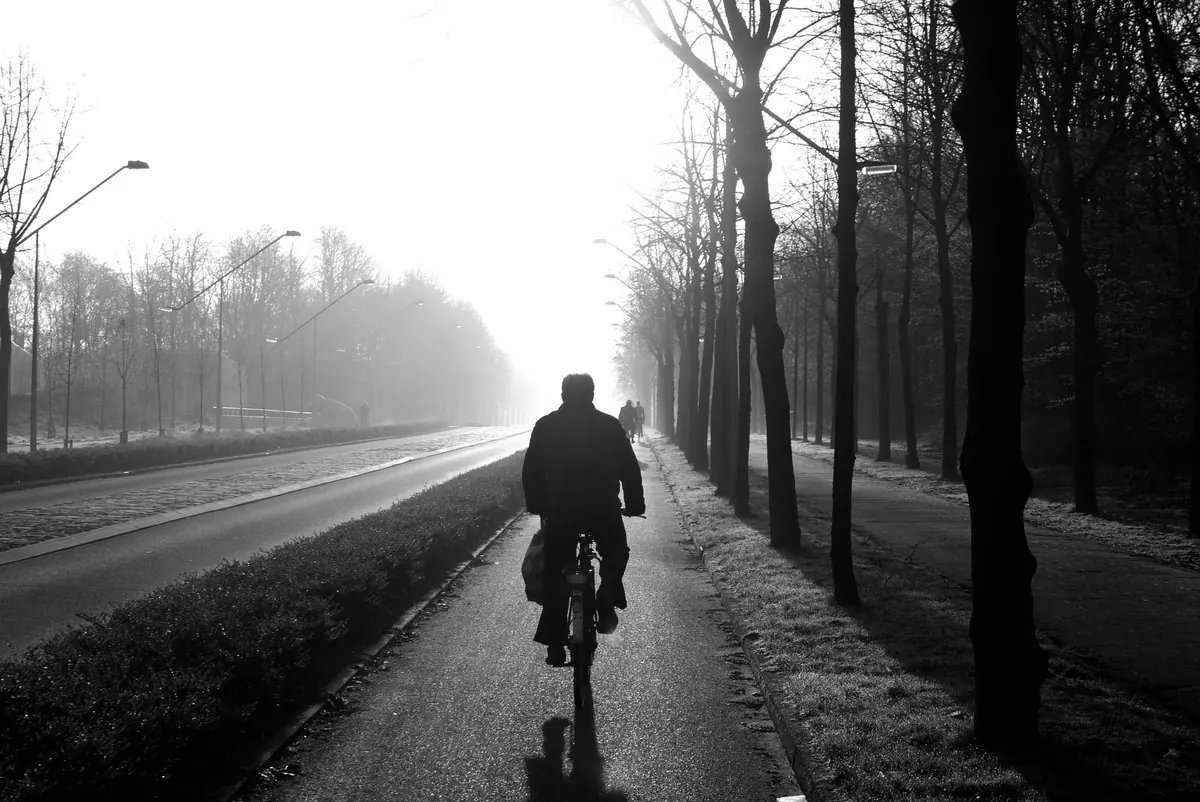
Fog plays tricks. A lane you could ride or run with your eyes half shut in July turns unfamiliar, and the landmarks you use to judge distance — a gate, a hedge, the crest of a hill — dissolve into flat grey. The real problem is not only that you cannot see. It is that other people cannot see you until very late.
That does not mean staying indoors until it clears. With the right lights, some thought about where you go and a different approach to speed and position, a foggy ride or run is still a good one. Here is what actually matters.
Fog does three things at once. It removes contrast, so the fluorescent yellow jacket that stands out against a hedge in daylight becomes another patch of pale nothing. It scatters light, so a very bright lamp turns into a glowing blob rather than a clear signal of where you are. And it flattens depth, which makes it much harder for a driver to judge how fast they are closing on you.
There is a local quirk worth knowing too. Fog often pools in valleys, along rivers and on low ground, so it can be clear at your front door and thick two miles away. It also tends to be worst at dawn and after dark, and often lifts by mid-morning.
Angle your front light down so it lights the road a few metres ahead rather than throwing a wall of white into the fog. A steady beam is easier for others to read than a fast flash, and a low or medium setting is usually more useful than maximum power. If your light has a shaped beam that cuts off at the top, use it.
This is where to spend your attention. Run two rear lights if you can: one steady, one flashing, so you are visible both to someone scanning ahead and to someone who glances up late. A light mounted high on your body or helmet shows over hedges and into dips in a way a seatpost light cannot. In thick fog, resist the brightest setting you own — it can halo and make your position harder to pin down.
Fluorescent fabric needs daylight and contrast to work. Retroreflective material sends a driver's headlights straight back at them, which is why it performs so well in poor visibility. Look for reflective panels, strips and bands rather than relying on colour alone.
Fog is damp and cold, so a light waterproof layer matters more than you might expect. Wet plus cold plus a headwind is a miserable combination, and it saps you faster than the same effort in dry air. If you have a heart or lung condition, cold damp air can make breathing harder — check with your GP or pharmacist if you are unsure.
Pick roads you know and would happily ride in the dark. Quieter roads with lower speed limits give drivers more time to react, and familiar junctions mean you are not guessing at layout in poor light. If your usual loop uses a fast A road or a dual carriageway, take a different way. The time saved is not worth the closing speeds.
Off-road routes need thinking about too. Canal towpaths, traffic-free paths and parks are appealing because there are no cars, but many have no lighting, and edges, bollards and water are hard to see. Other path users will not see you either. Slow right down, use a bell or your voice well in advance, and pass with plenty of room.
A short loop close to home is often the smartest choice on a foggy morning. You can bail out early if it thickens, and you are never far from a warm kitchen.
Reduce your speed until the distance you can see is comfortably greater than the distance you need to stop. That is the whole rule, and it is more useful than any fixed number. Keep your hands near the brakes and your eyes moving, watching the road surface for drains, painted lines, metal covers and wet leaves, all of which turn slick in damp air.
Position matters. Do not hug the kerb, where you appear late and invite close passes, but do not sit in the middle of a fast bend either. Ride or run a predictable, straight line, and move slightly further out at junctions and pinch points where drivers are looking for cars rather than for you. Signal earlier and more clearly than usual, and be audible: a bell, or a plain "coming past on your right", does more good than a silent approach.
Cyclists arrive faster than anyone expects, so assume you have not been seen until someone responds. Runners are slower and quieter, and drivers pulling out of side roads and driveways are scanning for vehicles. On roads without a pavement, run facing the traffic so you can step onto the verge if needed; on pavements, stay alert at every driveway.
For both, the honest advice is this: if visibility is seriously poor, change the session. Shorten it, move it to a lit loop you know well, or save the long one for another day.
Check the forecast and any fog warnings before you commit. Charge your lights and take two rear ones. Angle the front light down. Put on something reflective at ankle height. Choose a known, quiet route with an easy way home. Go slower than you would normally, and expect to be surprised once or twice.
And if it looks genuinely thick out there, a shorter version of the plan is a perfectly good outcome. The run you do next week in clear air will be better for it.
Photo: Hans Heemsbergen / Pexels